

Maintaining a clean and hygienic home is essential for physical health, comfort, and overall wellbeing. However, people living with mobility issues may experience challenges when completing everyday cleaning tasks due to mobility limitations or other support needs. Professional NDIS cleaning services can help participants maintain a healthier living environment by managing routine household cleaning and addressing areas where dirt and germs accumulate. With consistent support, participants can enjoy cleaner living spaces, improved household hygiene, and greater comfort in their daily lives.
-
Maintaining Clean and Hygienic Living Spaces
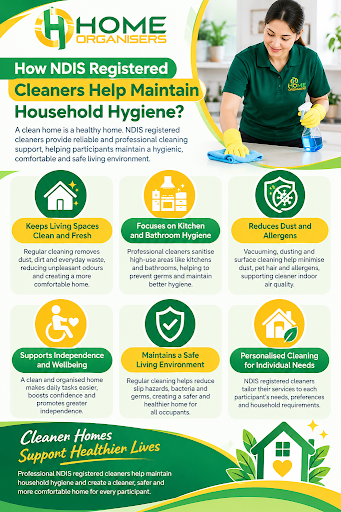
Regular household cleaning helps prevent the accumulation of dust, dirt, and everyday waste. Without consistent cleaning, surfaces can become unhygienic, unpleasant odours may develop, and living spaces can become more difficult to maintain.
Professional NDIS cleaners help keep essential household areas clean through tasks such as dusting, vacuuming, mopping floors, and wiping frequently used surfaces. These activities help maintain a comfortable environment and make everyday living more pleasant for NDIS participants.
Reliable NDIS registered cleaning in Richmond can assist eligible participants with maintaining cleaner homes through practical cleaning support tailored to their individual needs and household routines.
-
Improving Kitchen and Bathroom Hygiene
Kitchens and bathrooms require particular attention because they are frequently used and can harbour bacteria when cleaning is neglected. Kitchen benches, sinks, taps, toilets, and bathroom surfaces benefit from regular cleaning to maintain acceptable hygiene standards.
Professional cleaners can help clean these areas using appropriate products and methods. Regularly removing food residue, soap deposits, and accumulated grime can improve cleanliness and reduce unpleasant odours. Cleaning frequently touched surfaces also supports better everyday hygiene.
By maintaining these essential areas, professional cleaning services help participants enjoy a more comfortable and functional home environment.
-
Reducing Dust and Household Allergens
Dust, pet hair, and other airborne particles can accumulate on furniture, carpets, curtains, and other household surfaces. Excessive dust may aggravate allergies or respiratory sensitivities in some individuals.
Professional cleaning can help reduce dust accumulation through regular vacuuming, dusting, and cleaning of accessible surfaces. Keeping floors and frequently used areas clean also helps prevent dirt from spreading throughout the home.
Participants seeking NDIS registered cleaning in Melbourne may benefit from consistent household cleaning arrangements that address their specific hygiene requirements and help maintain cleaner indoor spaces.
-
Supporting Daily Living and Independent Living
For many NDIS participants, completing household cleaning tasks independently can be physically demanding or difficult to manage consistently. Professional cleaning support helps address these challenges by assisting with agreed household tasks.
Depending on the service arrangement, cleaning may include vacuuming, mopping, bathroom cleaning, kitchen cleaning, and wiping surfaces. A personalised approach allows participants to identify their priorities and maintain a living environment that suits their preferences.
A clean and organised home can also make household items easier to locate and living areas more comfortable to use, supporting participants’ everyday routines and independence.
-
Establishing Consistent Cleaning Routines
Maintaining household hygiene requires ongoing attention rather than occasional deep cleaning. Regular cleaning schedules help prevent dirt from accumulating and make household maintenance more manageable.
Professional cleaners can work with participants to establish suitable cleaning routines based on their needs and preferences. Consistent support can help maintain cleaner floors, fresher living areas, and hygienic kitchen and bathroom surfaces.
NDIS funding does not automatically cover every cleaning service. Participants should confirm whether the support meets the applicable funding requirements and aligns with their individual plan.
NDIS registered cleaners can play an important role in maintaining household hygiene by helping reduce dust, cleaning frequently used surfaces, and keeping kitchens, bathrooms, and living areas in good condition. Consistent cleaning support can improve home comfort, support daily routines, and help participants maintain a healthier living environment. With a personalised approach, professional cleaning services can make household maintenance more manageable for eligible NDIS participants.
Get In Touch WIth Us Today
Looking for reliable household cleaning support? Contact Home Organisers today to discuss your cleaning requirements and explore solutions designed to help you maintain a cleaner, more hygienic home.
Call us at 0468081399 or email us at homeorganisers.au@gmail.com for more information.
FAQs
1. How do NDIS registered cleaners help maintain household hygiene?
NDIS registered cleaners help participants maintain a clean and hygienic home by assisting with routine household tasks such as vacuuming, mopping, dusting, and cleaning kitchen and bathroom surfaces. Regular cleaning helps reduce dirt accumulation, control unpleasant odours, and create a more comfortable living environment.
2. What cleaning tasks can NDIS registered cleaners perform?
Depending on the agreed service, cleaning tasks may include vacuuming floors, mopping, dusting furniture, wiping surfaces, cleaning bathrooms, and maintaining kitchen hygiene. The specific tasks depend on the participant’s requirements, service agreement, and applicable NDIS funding arrangements.
3. Why is professional cleaning important for NDIS participants?
Professional cleaning can help NDIS participants manage household tasks that may be difficult because of mobility limitations or other disability-related support needs. Regular assistance helps maintain household hygiene, improve comfort, and make everyday living more manageable.
4. How often should NDIS participants arrange professional cleaning?
Cleaning frequency depends on individual needs, household size, daily routines, and hygiene requirements. Some participants may benefit from weekly cleaning, while others may require more frequent or occasional assistance. A suitable schedule should reflect the participant’s circumstances and agreed support arrangements.
5. How can NDIS registered cleaning in Richmond improve household hygiene?
NDIS registered cleaning in Richmond can help eligible participants maintain cleaner living spaces through regular dusting, vacuuming, mopping, and kitchen and bathroom cleaning. Consistent support helps manage everyday dirt and maintain a more hygienic home environment tailored to individual requirements.
6. What are the benefits of NDIS registered cleaning in Melbourne?
NDIS registered cleaning in Melbourne can help participants maintain comfortable, clean, and functional homes. Professional cleaning assistance can reduce dust accumulation, support kitchen and bathroom hygiene, and help participants manage household tasks that may otherwise be challenging.
7. Can NDIS cleaning services help reduce dust and allergens?
Yes, regular vacuuming, dusting, and cleaning of accessible surfaces can help reduce the accumulation of dust, pet hair, and other household particles. These practices can contribute to a cleaner indoor environment, although people with significant allergies or respiratory concerns may require additional measures.
8. How do professional cleaners maintain kitchen and bathroom hygiene?
Professional cleaners use suitable cleaning products and methods to remove dirt, food residue, soap deposits, and grime from appropriate surfaces. Regular attention to sinks, benches, taps, toilets, and other frequently used areas helps maintain cleanliness and reduce unpleasant odours.
9. Does the NDIS cover professional household cleaning services?
NDIS funding does not automatically cover every cleaning service. Eligibility depends on the participant’s individual circumstances, disability-related support needs, plan arrangements, and applicable funding rules. Participants should confirm their eligibility with their NDIS contact or support coordinator before arranging services.
10. How can NDIS participants maintain household hygiene between cleaning visits?
Participants can maintain household hygiene by wiping up spills promptly, storing rubbish appropriately, keeping frequently used surfaces clean, and following simple daily tidying routines. Using accessible storage solutions and maintaining clear pathways can also make everyday household maintenance easier.
