

A complete, easy-to-understand guide for families and carers
As people age, everyday environments can shift from feeling familiar and comfortable to becoming risky without anyone noticing. A home that once felt warm, lived-in, and full of memories can slowly fill with belongings, papers, clothing, boxes, and “just-in-case” items. Over time, this clutter does more than take up space — it increases the chance of falls, fires, and unnecessary hospital visits.
This isn’t about judgement. It’s about safety, dignity, independence, and wellbeing. Many older adults simply do not realise how much clutter has accumulated because it happens gradually, often over years. Families may also overlook it because it just feels “normal”.
But clutter has real consequences for home safety elderly.
In this guide, we will break down — in simple, everyday language — how decluttering can help older adults stay safe, healthy, and independent for longer, improving fall prevention and reducing hoarding fire risk.
Decluttering Reduces Falls — One of the Most Serious Risks for Older Adults
Falls are one of the main reasons older people end up in emergency rooms or hospital wards. Even a small fall can lead to broken bones, head injuries, or long recovery times. For some, a fall can mark the point where they lose their independence.
Clutter plays a surprisingly big role in fall prevention.
How clutter increases fall risk
- Objects on the floor become tripping hazards.
- Narrow walkways make it hard to move safely.
- Boxes and furniture create obstacles for walkers or mobility aids.
- Overfilled rooms make it difficult for carers and emergency workers to move around.
- Reaching over piles or into overpacked cupboards increases the risk of losing balance.
How decluttering helps
Decluttering supports fall prevention by creating clear, wide pathways through the home. Floors become visible again. There is space for walking frames, wheelchairs, or support workers. It becomes easier to turn corners, move from room to room, and access everyday items without stretching or bending dangerously.
Even simple changes like clearing the hallway, removing loose rugs, or organising electrical cords can dramatically reduce the chance of falling. Home safety elderly improves significantly when hazards are removed.
Decluttering Reduces Fire Risks — A Hidden Danger in Cluttered Homes
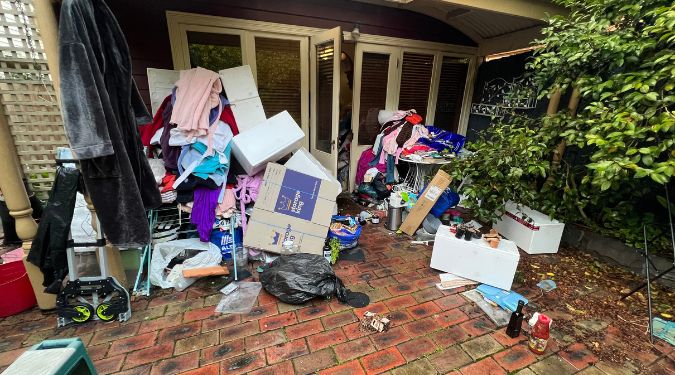
Fires in cluttered homes spread faster and become more dangerous very quickly.
Many people do not realise that clutter acts as fuel during a fire. Papers, boxes, clothing, and furniture all catch easily. When belongings pile up around heaters, stoves, and electrical outlets, the risk increases even more.
Clutter combined with hoarding behaviour can significantly increase hoarding fire risk, especially for older adults who may have decreased mobility or slower reaction times.
How clutter contributes to fires
- Too many items near heaters or stoves can catch fire.
- Overloaded power boards hidden behind furniture can spark.
- Stacks of paper or clothing near electrical equipment act as fuel.
- Blocked exits make escape difficult or impossible.
- Firefighters may struggle to enter or move through the home.
How decluttering helps
Decluttering opens up space around electrical areas, appliances, and walkways. It clears exits so older adults can escape quickly. It gives firefighters and emergency workers clear access. And it significantly reduces all the small, overlooked fire hazards that pile up over time.
Regular decluttering directly lowers hoarding fire risk and keeps home safety elderly a top priority.
Decluttering Helps Prevent Unnecessary Hospital Visits
Hospital visits are stressful for anyone, but especially for older adults. Clutter often contributes to avoidable emergencies that lead to hospital care.
Examples of clutter-related hospital visits
- A fall caused by tripping over belongings.
- Burns from trying to reach items near the stove.
- Health issues caused by dust, mould, or pests trapped in clutter.
- Missed medications because they were buried under papers.
- Medical equipment being blocked, lost, or inaccessible.
- Delayed emergency care because paramedics cannot reach the patient quickly.
Decluttering isn’t just about preventing accidents. It also helps with everyday health management and reinforces fall prevention and home safety elderly measures.
Decluttering Improves Mental Health and Reduces Stress
Clutter affects more than physical safety — it also impacts mental and emotional wellbeing.
Many older adults feel:
- overwhelmed by too many belongings
- stressed because they cannot keep up with cleaning
- embarrassed to let family or support workers inside
- anxious because they can’t find what they need
- mentally drained from living in a busy, crowded environment
Clutter creates “mental noise”. The brain has to work harder to process the environment. This leads to fatigue, frustration, and sometimes depression.
How decluttering helps mental well-being
- The home feels calmer and more peaceful.
- It becomes easier to find important items.
- Daily tasks take less effort.
- The mind feels clearer and more organised.
- Elders regain a sense of control over their space.
- It reduces the emotional weight that clutter creates.
A clear home supports home safety elderly while boosting mental health.
Decluttering Helps Older Adults Stay Independent for Longer
One of the biggest fears many older adults face is losing their independence.
Clutter speeds up that process.
When a home becomes unsafe, family members or support workers may start taking over tasks. In some cases, it becomes unsafe to continue living at home at all.
Decluttering supports independence by:
- making the home safer
- making moving around easier
- reducing the need for constant assistance
- lowering the chance of accidents (fall prevention)
- helping elders manage their own belongings
A simpler, organised home lets older adults do more on their own, reducing hoarding fire risk and reinforcing home safety elderly.
Decluttering Strengthens Family Relationships
Clutter often causes tension between families and older loved ones.
Family members may feel:
- worried about safety
- frustrated by the amount of clutter
- unsure how to help
- guilty for not doing enough
Older adults may feel:
- protective of their belongings
- embarrassed about the condition of their home
- overwhelmed by the task
- fearful of losing important memories
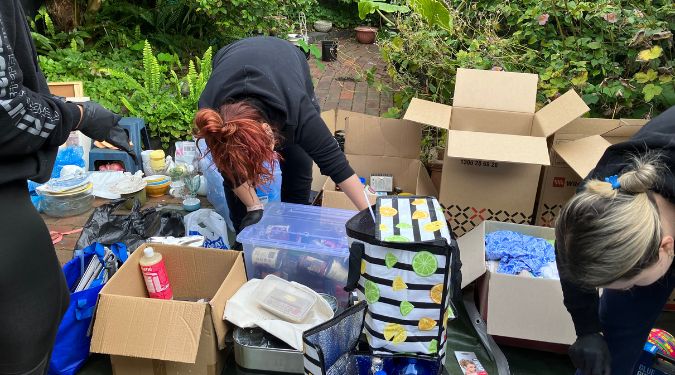
Decluttering gently, with support and respect, helps rebuild trust. It gives families a chance to work together rather than argue.
Reducing clutter improves home safety elderly and lowers hoarding fire risk, helping everyone feel secure.
Decluttering Improves Mood, Productivity, and Daily Life
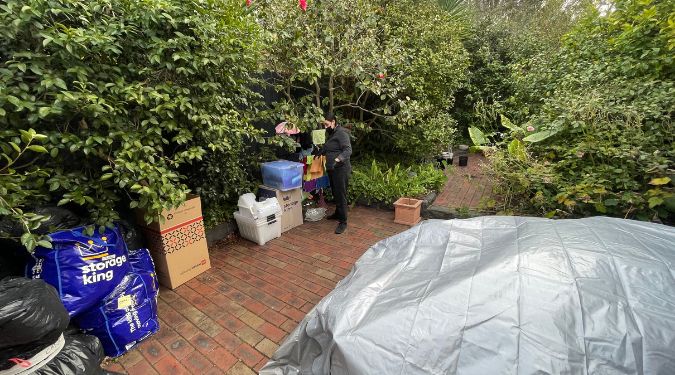
A clutter-free home affects how a person feels every day.
Older adults often report:
- more energy
- better sleep
- increased motivation
- more interest in daily routines
- more confidence in moving around
- greater willingness to have visitors
- a renewed sense of purpose
When everything has a place, life becomes easier. Decisions take less effort. Tasks feel more achievable.
Clear spaces support fall prevention and home safety elderly, keeping daily life safer and calmer.
Decluttering Supports Physical Health and Hygiene
Clutter traps dust, dirt, mould, and even pests. For older adults, this can lead to:
- breathing problems
- allergies
- infections
- skin issues
- worsening asthma
- higher stress on the immune system
Decluttering makes cleaning easier and improves overall hygiene, reducing risks associated with home safety elderly.
Decluttering Saves Money and Protects Wealth
Many people don’t realise clutter is expensive.
Clutter can cause:
- lost bills
- missed appointments
- buying duplicates of items you already have
- damage to belongings caused by overcrowding
- pests that lead to costly treatments
- emergency repairs
- fines or late fees due to lost paperwork
- increased cleaning or maintenance costs
Decluttering helps older adults:
- keep track of their finances
- find important documents
- protect valuable items
- avoid unnecessary purchases
- reduce risks that lead to expensive hospital visits
Lowering hoarding fire risk and improving fall prevention also helps protect wealth and reduces emergency expenses.
Decluttering Protects Dignity and Quality of Life
Above all, decluttering protects what matters most: dignity, comfort, and the ability to live life on your terms.
A clutter-free home helps older adults feel:
- more in control
- proud of their home
- comfortable inviting people over
- confident in their daily routines
- less anxious and more secure
Everyone deserves a safe, calm space to live in — especially in their later years. Home safety elderly improves when clutter is removed.
Final Thoughts
Decluttering is not about minimalism or perfection. It is about safety, wellbeing, independence, and quality of life.
For older adults, a clutter-free home can mean:
- fewer falls (fall prevention)
- lower fire risk (hoarding fire risk)
- fewer hospital visits
- better mental health
- improved relationships
- better hygiene
- more independence
- less stress
- more confidence
- and a stronger sense of peace
A safe home is a comfortable home. And a comfortable home is a place where older adults can truly thrive while maximising home safety elderly.
Ready to make your home safer and more organised for you or a loved one? Call us today at 03 8583 9103, email nancy@homeorganisers.com.au, or visit homeorganisers.com.au to get started!
Key Takeaways
- Decluttering significantly improves home safety elderly by reducing hazards around the home.
- Clear, organised spaces support fall prevention and lower the risk of injuries.
- Removing excess items reduces hoarding fire risk and makes homes safer in case of emergencies.
- Decluttering enhances mental health, mood, and overall wellbeing for older adults.
- A clutter-free home promotes independence and confidence in daily living.
- Families benefit from improved relationships and reduced stress when homes are organised.
- Regular decluttering can prevent unnecessary hospital visits and costly emergency situations.
- Simplifying the home also protects finances, valuable items, and important documents.
- A tidy, organised environment creates a calmer, safer, and more comfortable living space.
Case Study 1:
Margaret’s Journey to a Safer, Clutter-Free Home
Background:
Margaret, 78, had been living alone in her Melbourne home for over 40 years. Over time, her home gradually became cluttered with newspapers, magazines, kitchenware, and sentimental items. While Margaret valued her independence, her family became increasingly concerned about home safety elderly issues. They worried about falls, blocked pathways, and hidden fire hazards.
Challenges:
- Narrow walkways and piles of belongings increased fall risks.
- Stacks of paper and clothing near electrical outlets heightened hoarding fire risk.
- Margaret felt overwhelmed and anxious, unsure where to start decluttering without losing treasured items.
- Her children were concerned about potential hospital visits if an accident occurred.
Solution:
Home Organisers implemented a step-by-step, respectful decluttering process:
- Assessment & Prioritisation: We identified high-risk areas such as hallways, kitchen, and living room.
- Clear & Organise: We cleared pathways, arranged furniture safely, and removed tripping hazards.
- Memory & Sentiment: Sentimental items were carefully sorted, keeping cherished possessions while storing or donating others.
- Maintenance Plan: A simple, sustainable routine was created for Margaret to maintain her organised space.
Results:
- Margaret’s home became safer, with wide, clear walkways and easy access to everyday items.
- Fall prevention was dramatically improved, reducing her family’s anxiety.
- Risk of hoarding fire risk was minimised by clearing clutter around electrical equipment and heaters.
- Margaret reported improved mood, confidence, and independence. She could move freely around her home, enjoy visits from family, and focus on hobbies rather than clutter.
Case Study 2:
John’s Home Transformation and Peace of Mind
Background:
John, 82, had accumulated decades of belongings, including old furniture, boxes of documents, and clothes. His home was difficult to navigate, creating high fall prevention and hoarding fire risk concerns. John’s daughter noticed he often avoided certain rooms and worried about potential accidents.
Challenges:
- Piles of items in hallways and living spaces made walking hazardous.
- Fire hazards were present near old heaters and electrical cords.
- John experienced stress and low mood due to feeling trapped in his own home.
- Family worried about frequent hospital visits if a fall occurred.
Solution:
Home Organisers provided hands-on support with:
- Safety-Focused Decluttering: Prioritising areas that directly impacted home safety elderly, such as entrances, bathrooms, and living areas.
- Organising & Storage Solutions: Items were categorised and stored safely, ensuring important belongings were accessible.
- Fire Risk Mitigation: Electrical cords and heaters were repositioned, removing combustible clutter and reducing hoarding fire risk.
- Empowering Independence: John was included in decisions, ensuring he retained control over his possessions.
Results:
- John’s home was now safe and easy to navigate, dramatically improving fall prevention.
- Risk of hoarding fire risk was significantly reduced, giving John and his family peace of mind.
- He regained confidence and reported feeling happier and less stressed in his home.
- Family members noticed he was more engaged, social, and willing to host visits in his home again.
Frequently Asked Questions on Decluttering for Elderly Safety
- How can decluttering help my elderly parent feel safer at home?
Decluttering removes trip hazards, clears pathways, and makes it easier for older adults to move around, helping them feel more confident and secure in their own home.
- My loved one struggles with keeping their home tidy. Can a professional help without making them feel overwhelmed?
Yes. Home Organisers work gently and respectfully, helping to sort, organise, and declutter in a way that feels manageable and empowering, not stressful.
- Can decluttering really prevent falls and hospital visits for older adults?
Absolutely. By creating clear, accessible spaces and removing obstacles, decluttering reduces fall risk and lowers the chances of injuries that often lead to hospital visits.
- What if my elderly parent has sentimental items and doesn’t want to get rid of them?
We focus on keeping meaningful items while finding smart ways to organise the rest, so your loved one can enjoy a safe, tidy home without losing cherished memories.
- How does decluttering reduce fire hazards in a home?
By clearing piles of paper, boxes, and clothing away from heaters, stoves, and electrical outlets, decluttering reduces hoarding fire risk and ensures exits are accessible in emergencies.
- Can decluttering improve my loved one’s mental wellbeing and mood?
Yes. A clean, organised home can reduce stress, anxiety, and frustration, creating a calm, uplifting environment that supports mental health and emotional wellbeing.
- How often should an elderly home be decluttered to stay safe?
Even small, regular sessions every few months can make a big difference in home safety elderly, preventing clutter from building up and keeping the home functional and safe.
- Will decluttering help my family feel less stressed about my parent living alone?
Definitely. Knowing the home is organised and safe gives families peace of mind, reduces worry about accidents, and makes visits more enjoyable.
- How do Home Organisers handle sensitive areas like bedrooms or personal spaces?
We work with respect and discretion, ensuring privacy while creating practical, safe, and organised spaces that your loved one can easily navigate.
- Can decluttering save money while improving safety?
Yes. Organised homes prevent lost items, reduce unnecessary purchases, and lower the risk of costly accidents, making fall prevention and fire safety more affordable and effective.
